Madre Juana
Juana Cruz “Madre Juana” (1972)
Thanks to Juana Cruz, la madre de Camaron, for passing on her arte to her son and to all the mothers who share their gifts and beauty with the world.
Los Angeles

| M | T | W | T | F | S | S |
|---|---|---|---|---|---|---|
| « Jun | ||||||
| 1 | 2 | 3 | 4 | 5 | ||
| 6 | 7 | 8 | 9 | 10 | 11 | 12 |
| 13 | 14 | 15 | 16 | 17 | 18 | 19 |
| 20 | 21 | 22 | 23 | 24 | 25 | 26 |
| 27 | 28 | 29 | 30 | |||
Juana Cruz “Madre Juana” (1972)
Thanks to Juana Cruz, la madre de Camaron, for passing on her arte to her son and to all the mothers who share their gifts and beauty with the world.
Manuela Carrasco
A beautiful clip, a perfect setting. One of the best eras for flamenco. ‘La Diosa’ in all her flamenco puro glory!
This clip seems to appear and reappear on Youtube. It’s originally from the Ritmo y Geografía del Cante DVD series.
From the DVD description, courtesy of Flamenco World:
Cantaor Children
The earliest steps taken by artists such as Moraíto, La Macanita, Remedios Amaya, Carmelilla Montoya, Antonio de la Malena and Carlos Heredia, who fascinated their relatives, friends and neighbours with their gracefulness and self-assurance from a very young age. They are unique performances that provide some of the keys for understanding the transmisssion of the heritage of flamenco culture.
Recently someone close to my family was killed in a tragic accident. The heartbreak, pain and grief of his friends and family have been at times, overwhelming. The only music I think that can ever come close to expressing these emotions is siguiriyas. Here are two I’ve been listening to these past few days. RIP Carlos Roberto Guillen…
Camaron de Isla
Dolores Agujetas
La Paquera de Jerez (from the movie Vengo)
From Flamenco Quote of the Day by Sakai Flamenco:
Federico Garcia Lorca writing on seguiriyas…
…There are songs where the lyrical tremor reaches a point inaccessible to any but a few poets:
The moon has a halo; my love has died.
Cerco tiene la luna; mi amor ha muerto.
There is much more mystery in those two lines than in all the plays of Maeterlinck. Simple, real mystery, sound and healthy, without gloomy forests or rudderless ships. It is the living eternal enigma of death:
The moon has a halo; my love has died.
…Behind these poems lurks a terrible question that has no answer. Our people cross themselves in prayer, look at the stars, and wait in vain for a sign of salvation. The gesture is pathetic but true. And the poem either poses a deep emotional question with no answer, or solves it with death, which is the question of questions.
El Torta-Dos Lunares
Are you in the mood yet? We are! Hope to see you this Friday and Sunday for some communal Flamenco festivity!

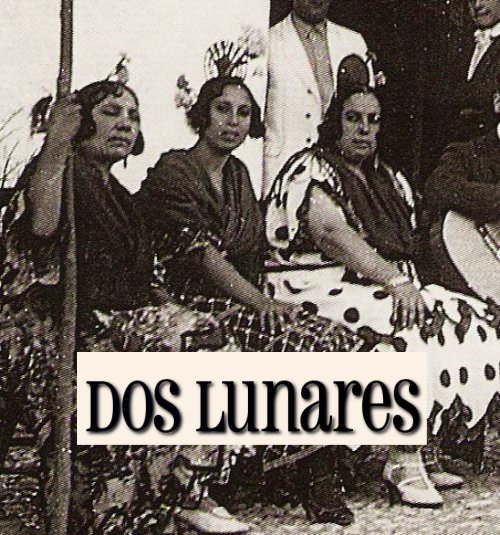
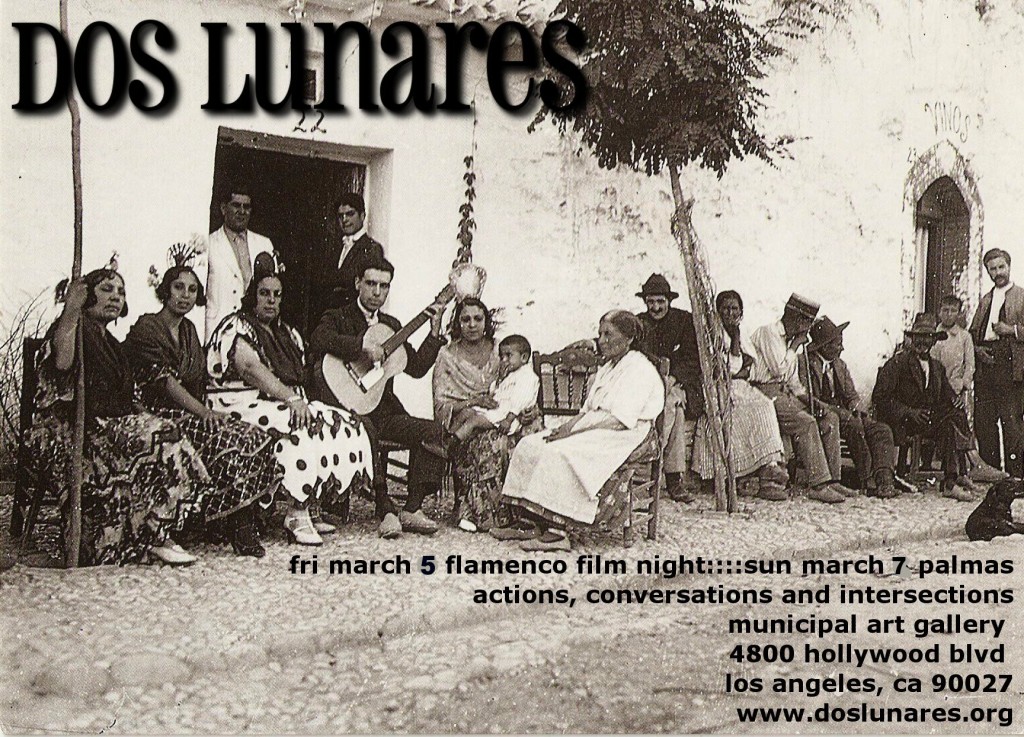
Dos Lunares is excited to present Calé Rachi a weekend of exploration into the world of Flamenco through film, discussion and interactive rhythm making/palmas in conjunction with Actions, Conversations and Intersections an exhibition of participatory art by 60 Los Angeles artists and organizations, January 24 – April 18, 2010 at the Los Angeles Municipal Art Gallery.
Our Flamenco weekend will kick off with a film night, discussion and tapas on Friday, March 5 at 7:30pm. We will be screening the wonderful documentary El Turista Soy Yo about Flamenco singer Luis Agujetas, the youngest son of the well-known and highly regarded Flamenco cantaor Agujetas el Viejo. This documentary by Trina Bardusco, follows Luis Agujetas through his daily rituals which include his nightly job singing at the famous Flamenco tourist mecca La Carbonería en Sevilla, Spain.
Palmas, the art of Flamenco hand clapping will be featured in our Sunday presentation, March 7 at 2pm. Join us for a lively afternoon of interactive, participatory rhythm making with Los Angeles bailaora, Cristina Lucio.
The name of our presentation, Calé Rachi or Gypsy Night is a nod to the intersections of Chicano and Gitano culture that took place along the Mexican-American border during the early 1900s.
Los Angeles Municipal Art Gallery at Barnsdall Park 4804 Hollywood Boulevard Los Angeles, CA 90027-5302 - (213) 485-4581
Camarón por soleá con Tomatito
Yesterday, I attended the Roots and Evolution of Flamenco presentation at USC sponsored by La Peña Andaluza en California. Despite arriving a bit late, I was fortunate to catch some of the performances and was especially glad to make it in time to hear Angelita Agujetas sing as she is one of my favorite local cantaoras.
After the presentation, there was a short question and answer period and a thoughtful and at times biting, discussion took place regarding flamencologists, the difference in dance styles, the use of castanets and most surprisingly, some comments on whether Camaron was a good interpreter of Solea. As someone who worships at the altar of Camaron, I was surprised to hear this but considering the source, one of the Agujetas clan, I was willing to examine the idea.
I don’t think I know enough about cante to say anything on the subject but I have included two videos here, one of Camaron con Tomatito and the other of Antonio Mairena, who is well-known for his interpretations of Solea. I will let you make your own decision.
Antonio Mairena con Manuel Morao – Soleá
Antonio Mairena con Melchor de Marchena- Soleá – Parte 2
To hear even older interpretations of Soleá, please check out the excellent site Excavated Shellac. There are a couple of very interesting soleá tracks including one por baile.
Dolores Agujetas con sus hijos cantando por buleria
I once read an interview with Dolores Agujetas where she said I don’t sing Flamenco, I sing Cante Gitano. I wouldn’t disagree.
Watch the video until the end to see los hijos do their thing.
Peret-Borriquito
I’m in the midst of reading Little Money Street: In Search of Gypsies and Their Music in the South of France, a nice little book on French Catalan Gitanos. It mostly focuses on the popular group Tekameli. But whenever I hear ‘Catalan rumbas’ my mind automatically goes to Peret and his charming rumbas. He is the master of the style.